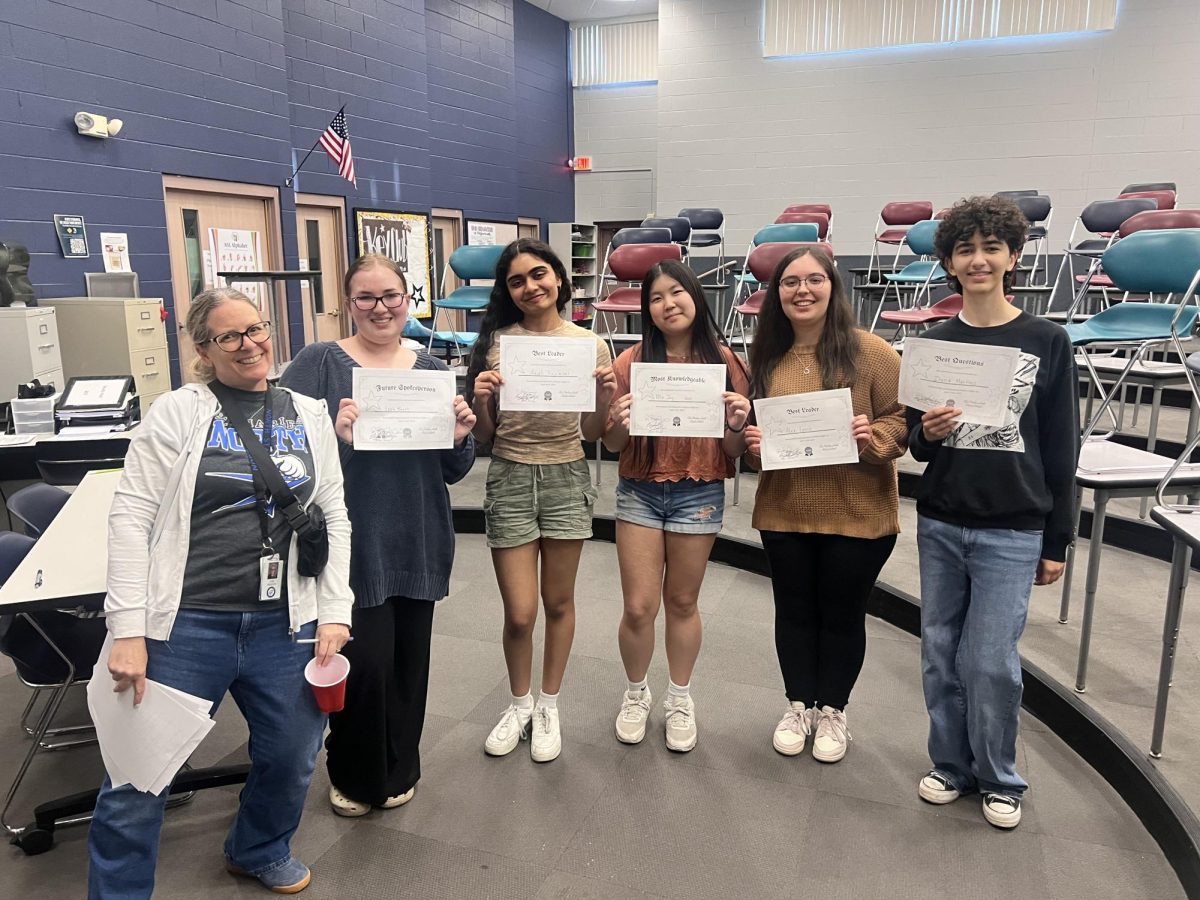
As students filed into room 302 on April 24, what began as an uncertain, even hesitant gathering quickly became a meaningful and engaging discussion. The conversation escalated into a lively exchange on the topic of ICE and immigration laws in the U.S. Despite the heavy subject, the environment was safe and respectful to all ideas shared within the debate. These students were participating in the very first annual Debate Night between the mock trial and the debate clubs.
“Once people rolled in, I felt like the energy started kind of showing up as we got into it. It started becoming more of a very plentiful conversation,” said junior Anjali Rajagopal, who is the president of the debate club. “We were able to hear out both sides really well, which I thought was very successful.”
Debate Night, which was judged by Shane Dwyer, Lori Keough, Elizabeth Battaglia and Rebecca La Porta, brought together members of both clubs to discuss the topic of immigration regulations. Despite initial nerves, especially given the weight of the topic, students engaged in a structured and respectful discussion that encouraged critical thinking.
The event was the result of over a month of planning. After pitching the idea to the debate club, Rajagopal and other club organizers collaborated with the mock trial team to prepare research documents, coordinate logistics and promote the event. While many participants were friends outside of the debate, they maintained a professional environment, focusing on their arguments rather than personal connections.
Throughout the night, students debated both sides of immigration policy, with some advocating for stricter regulations and others arguing for looser policies. One participant, sophomore Cadence Brubaker, who argued in favor of looser regulations, noted that the topic felt especially relevant to the school community. Despite the potential for discomfort, students remained committed to their assigned positions and engaged thoughtfully with opposing viewpoints.
As the discussion progressed, many participants found the experience to be more educational than expected.
“Once we kind of extracted ourselves from, I guess, our personal views, it started becoming just pretty educational,” Rajagopal said. “I can kind of understand both viewpoints, to an extent.”
The topic itself carried particular weight within the school community.
“It’s very controversial, because a lot of the students in our school are immigrants or their parents,” Brubaker said. “A lot of students are a part of that topic.”
Even with these personal connections, students remained focused and professional, setting aside friendships and individual beliefs to fully engage in the debate.
Beyond the topic itself, Debate Night allowed students to strengthen their important academic and real-world skills.
“It’s a nice time for people to explain themselves and learn better how to debate, work with a short time, not a lot of knowledge, and receive criticism, all within the same two-ish hours,” Brubaker said.
The event challenged students to think quickly, articulate their ideas clearly and respond to opposing arguments in real time. Students also reflected on the broader importance of the discussion.
“By openly expressing our ideas, especially on these kinds of heavy topics, we’ll have less to be mad about because we can actually understand what each side believes and why they believe that,” Rajagopal said.
Looking ahead, many believe that experiences like Debate Night have lasting value. It served as a meaningful learning experience by creating a space that was both respectful and intellectually stimulating. Students were able to gain valuable knowledge and life skills, especially regarding public speaking, respectful debating and how to handle constructive criticism.
“As we’re going to progress into adulthood, being able to talk openly about these kinds of ideas would be really helpful and beneficial to getting people to develop that skill early on,” said Rajagopal.