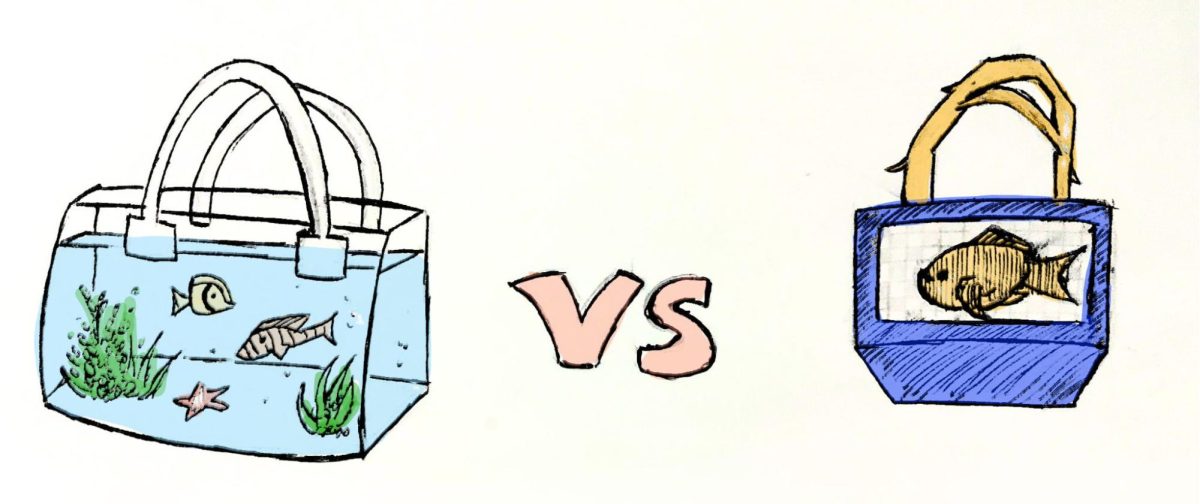
Recently, AI posters and advertisements have exploded in popularity. Walking through the school hallway, multiple AI-generated poster designs stare back at you. Scrolling on social media, many types of AI-generated or AI-enhanced advertisements are present. From an uncanny feel to unrealistic expectations, the use of AI makes these posters and advertisements much less effective.
In theory, AI posters include everything they need to. They typically have information, images and are a cohesive design. However, these posters tend to have an uncanny feel. Because of the lack of human design, they simply look a little off and are uncomfortable to look at. In this way, they lose effectiveness because the viewer’s attention is drawn to the look of the poster, not the information it is trying to convey.
It is frustrating to see AI being used to create posters when so many alternatives exist, particularly in D303, where we have access to a paid Canva plan. There are many other ways to procure a poster. Using Canva or a similar program, people can easily create a new design or use an existing template. Another option is to commission a designer to create a poster. Either of these options will result in a more appealing design.
Lots of people work as artists and graphic designers. By using AI to create posters, these jobs are losing a lot of business.
Perhaps an even larger problem, AI advertisements have taken off on social media. It is almost impossible to scroll on any social media platform without seeing an extremely unrealistic product advertisement created by AI, typically promoting a dropshipped, low-quality item.
While many people can discern these advertisements from real videos, AI is rapidly improving, and subtle video or photo enhancements can be easy to miss. False advertising is a larger problem than ever.
False advertising means consumers are purchasing an item that will not live up to what they were promised. In many cases, these consumers will return the item or throw it away. Whichever one happens, it is likely that these items will end up in a landfill.
According to Optoro, there were 9.5 billion pounds of returns in US landfills in 2022. Many companies do not fully process and resell returns because the cost outweighs the benefit. Earth911 says that it takes 66% of the product’s price to process its return and that returns account for $816 billion in lost sales. Even with the loss, it is not worth paying and doing the work to resell the items. There is a direct correlation between false advertising and returned products.
Using AI in posters and advertisements not only kills effectiveness and takes away jobs from artists and graphic designers, but it also causes environmental damage. People should take care to create posters themselves or hire someone, and businesses should only use real, unenhanced pictures and videos to advertise their products.