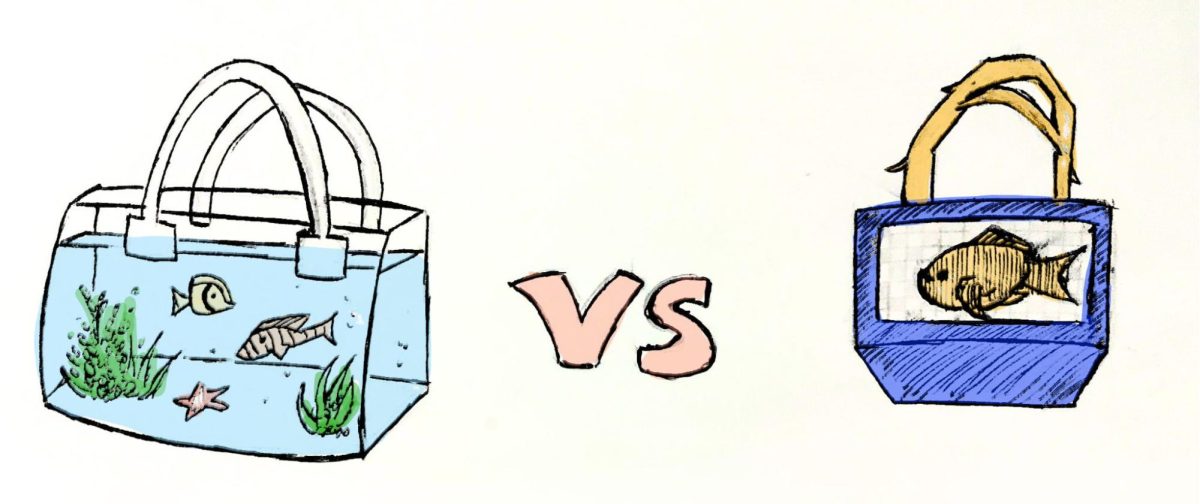
When you get to class early and have nothing to do, what is your first instinct? The answer is probably to pull out your phone. You check Instagram, scroll through some reels, maybe pull up a game. This generation’s constant need to actively be doing something, whether it be at school, at home or in public, is growing increasingly clearer.
And yet for some reason, it never seems to cross anyone’s mind to pull out a book and read a few pages instead of scrolling on TikTok. In fact, studies show that the number of people reading for pleasure has been significantly decreasing. A study conducted by the National Library of Medicine shows that the rate of individuals reading for fun declined by an average of 3% per year from 2003 to 2023. Furthermore, the percentage of adults that reported reading at least one book in the past year declined from 54.6% in 2012 to only 48.5% in 2022, according to the National Endowment for the Arts.
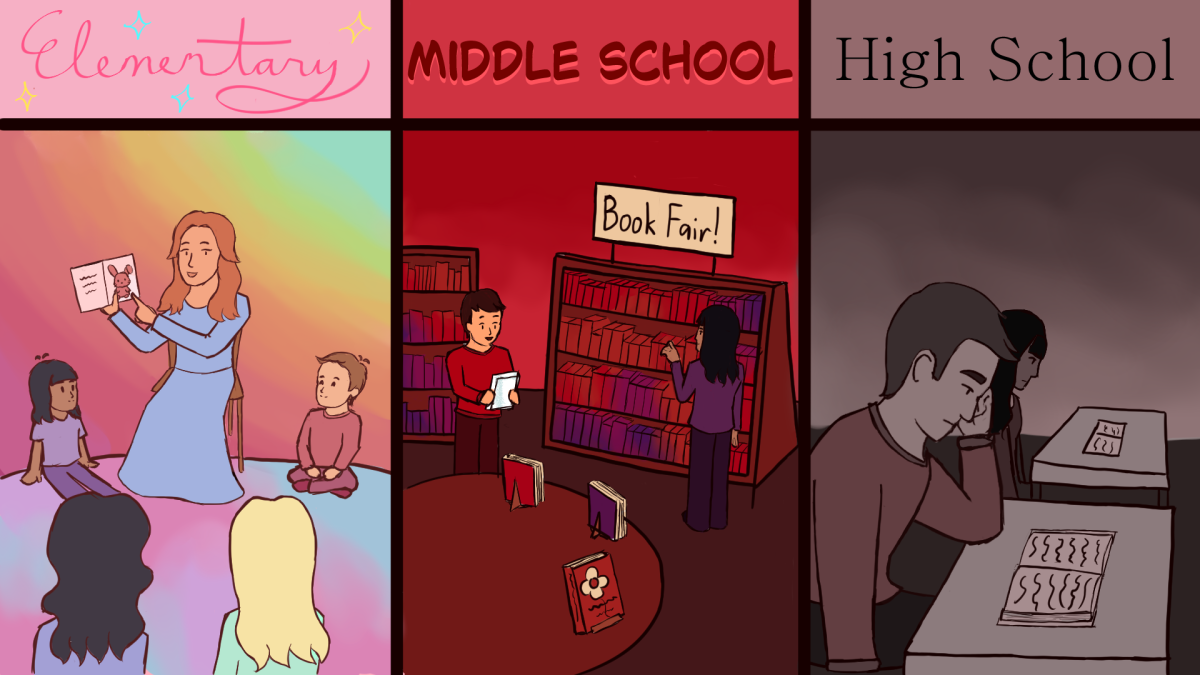
Part of this decline can likely be attributed to the steady loss of encouragement to read as we grow older. From elementary school to high school, the way reading is presented to us and therefore the way it is viewed differs drastically.
There are countless reading-related events and activities I remember from elementary school. Each week, we walked down to the LRC as a class and had the opportunity to check out books, which we were then given class time to read. My teachers did multiple read-alouds over the course of the year. We even participated in challenges and book clubs within our own school and across the district, reading picture books in a March Madness style competition and voting for our favorite Bluestems and Monarchs. There was so much aimed at promoting books that it was hard not to fall in love with reading.
“It’s hard not to be a reader in elementary school because you do have teachers who are passionate about it and want you to develop the love of it,” said Wild Rose LRC Assistant Michelle Tykal. “You’re introduced to so many different genres when you’re younger, and you kind of figure out what you like.”
One of the specific events I looked forward to was whenever an author would come visit to talk about their books and writing process. Throughout elementary school, multiple published authors came to share their novels with us, and I found it to be really inspiring.
“[It’s] really motivating for staff and kids to just hear [the authors’] stories and encourage them to read or encourage them in the writing,” said Tykal. “They talk about their writing process and how you don’t just write the book once and it’s done, how you have to do all the rewrites and revisions, and how many times from a book publisher they were told no, and they just kept going and going and going for it, and finally got their book published.”
This past year, historical fiction author of “Refugee” and “Ground Zero” Alan Gratz paid a visit to both Wredling and Thompson. You hear about children’s and middle grade authors visiting D303 elementary schools throughout the year. But what about the high school students? Why are we left out from these experiences? There are plenty of authors I would love to meet, but North is sadly lacking in this area.
Another aspect of elementary and middle school reading that I loved was the book fairs. Twice a year, the school would put up shelves of books that we could browse through and purchase. Sure, I am now capable of driving to Barnes and Noble and easily buying the book I want, but there was something particularly enjoyable about having that opportunity in a school setting. Having a smaller, carefully selected supply of books to choose from helped me discover some of my favorite authors and build my own library.
High school, on the other hand, is different. With sports, clubs and the huge amount of homework piled on us, we are left with little free time to sit down and read a book. The small amount of spare time people have is often spent on social media or watching TV. Any reading that we end up doing is for a class, which can take away from the enjoyment of the book.
And yet, why does reading even matter? Why should we put the effort in?
Reading a book has the unique power to expand our viewpoint by offering new perspectives on other ways of life. Books about different cultures, religions, countries and even fantasy worlds allow us to understand more about other people and empathize with them, but they also allow us to connect with fictional characters we identify with.
“It teaches kids to put themselves in someone else’s shoes, and it gives you empathy for people where they’re coming from or live a different life than you live. … I just feel like it gives you a better understanding of other people, and maybe even learning,” said Tykal. “It gives you a bigger heart.”
Not only does reading give you empathy for those around you; it can also be a vital tool in improving writing and speaking skills as children grow up. Furthermore, a study from the University of Sussex found that reading can reduce stress levels by up to 68%. Reading for only a few minutes a day can significantly improve your mental health. Not to mention the fact that, once you find the right book, reading can bring a lot of joy into your life, whether it be by learning about another time period or falling in love with a fantasy world.
Ultimately, reading is not a waste of time, and the fun of reading does not have to stop at high school. Here at North, we should be encouraging a love for books, and hosting events such as author visits and book fairs would be a great first step.