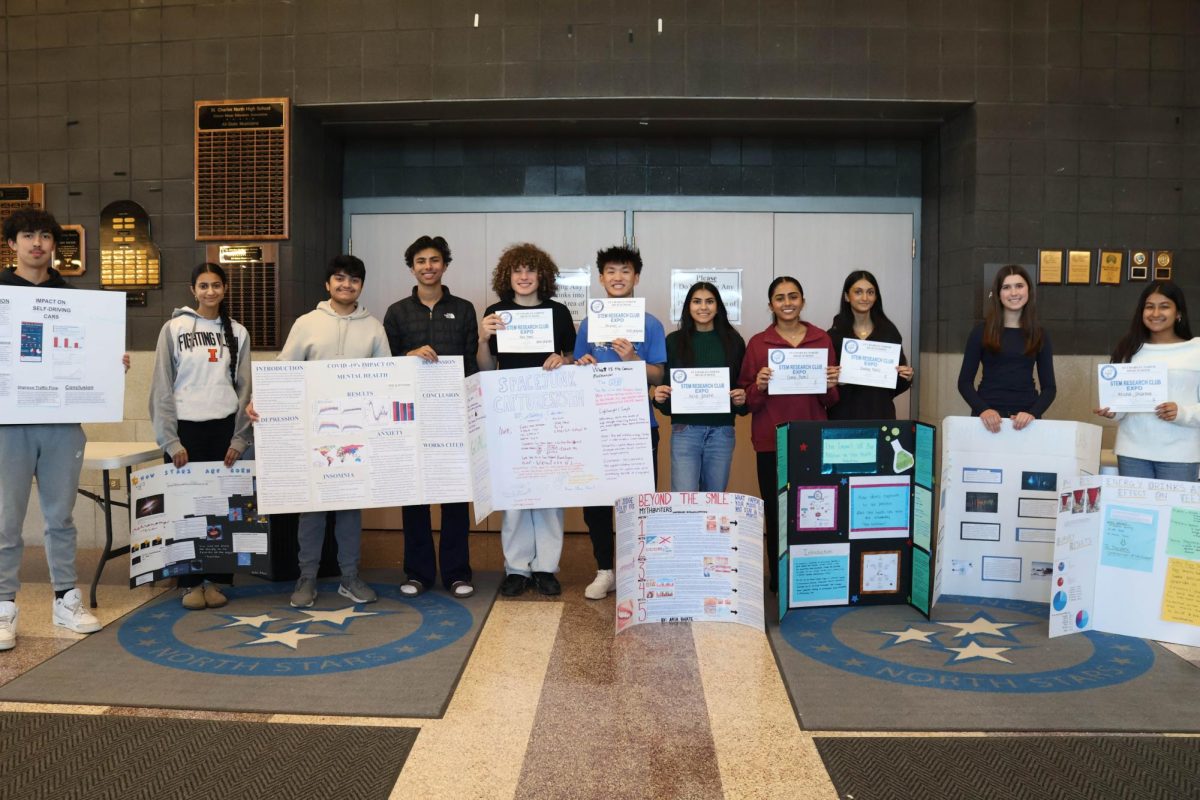
On Feb. 25, North’s STEM research club hosted their first science fair in the auditorium lobby. The fair had four judges that each participant presented to. When all of the students were finished presenting, the judges came to a consensus on which students won awards. The awards won were the most original project, first place, second place and third place.
Students showcased a problem and their takes on solutions at the event. Each student had all of the judges view their stand one at a time and were followed up with questions when they were done presenting. Some students had a live demonstration and others had experiments that they compiled the weeks before the project.
Two of these students, juniors Michael Li and Alexander Jones, presented their take on a system that mitigates space debris called “The Net.” They went into depth on a wireless network that would be able to navigate through space, take grasp of any space debris like broken satellites or fragments from explosions or collisions and safely bring them back to earth to be recycled or stored. With both of their research and hard work put together, they won the most original award with their presentation.
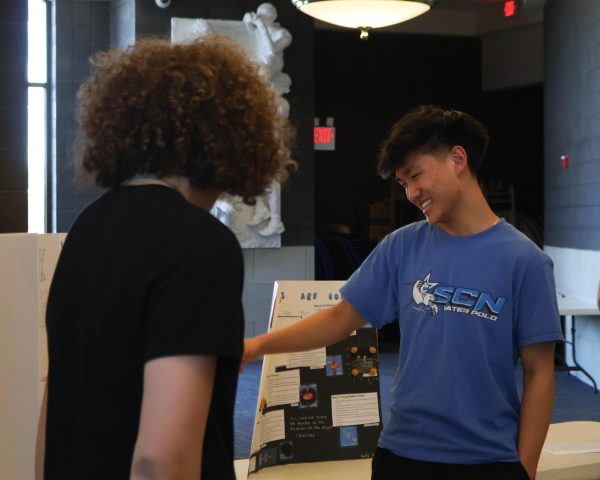
The two students enjoyed having a place to show their peers their research and have them recognize their work.
“It’s just really cool seeing the fruits of our labor unveiled, and it’s really cool looking at the other people and their hard work,” said Jones.
Another example of a booth was sophomore Aria Bhate’s project on dental care. She spent a long time researching the most common lies told about teeth and the way that we take care of them. Her booth included a live participatory demonstration. She had each of the judges put a tablet in their mouths and move it around, covering their teeth in a deep blue hue that represented the plaque in our mouths. Then she had them brush their teeth. Even after the judges brushed extensively, they could not get the “plaque” out of their mouths, giving the judges a fun and interesting experience. With all of her effort and work, she won first place.
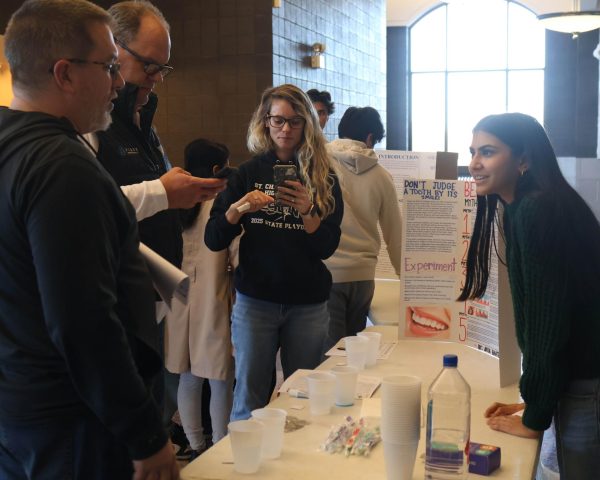
All of the students spent a lot of time on their projects and creating their posters. They enjoyed having an event where they can get prizes for the time they put towards preparing for the fair.
“I spent a lot of time on it. I’m glad that I got a reward from it,” said Bhate.
Some of these students also enjoy being able to present to an audience outside their peers while they also learn essential skills when they present.
“This is a great way for people to showcase their research to [an audience] and gain speaking skills as well as research skills. We encourage a collaborative environment,” said sophomore Ved Bhagat, founder and president of the club.
Each student had a vastly different poster and topic than their other classmates, ranging from self-driving cars to the life cycle of stars.
“It was interesting to see everyone else and the diversity of the STEM field. Mine was more [medically] based, but there were a lot of people who had [projects] about engineering or space,” said Bhate.
In order for the fair to happen, many of the students stepped up to leadership roles.
“I actually reached out to the auditorium manager to make sure we had the space available,” said Jones.
The first annual North STEM science fair had many different takes on many different problems. Peter Gleason, the adviser of the club and one of the judges, was happy to see the work that his students put into their projects and compare the students’ differences in their projects. None of the students shared what their projects were before the fair, so Gleason found it interesting to see what they came up with.
“I had no idea what they were going to do. I had no clue what any of their activities were like, what any of their research was. So it was kind of unique for me. I knew they were working on them, but it was cool being a judge and just getting [the opportunity to do] this,” said Gleason.