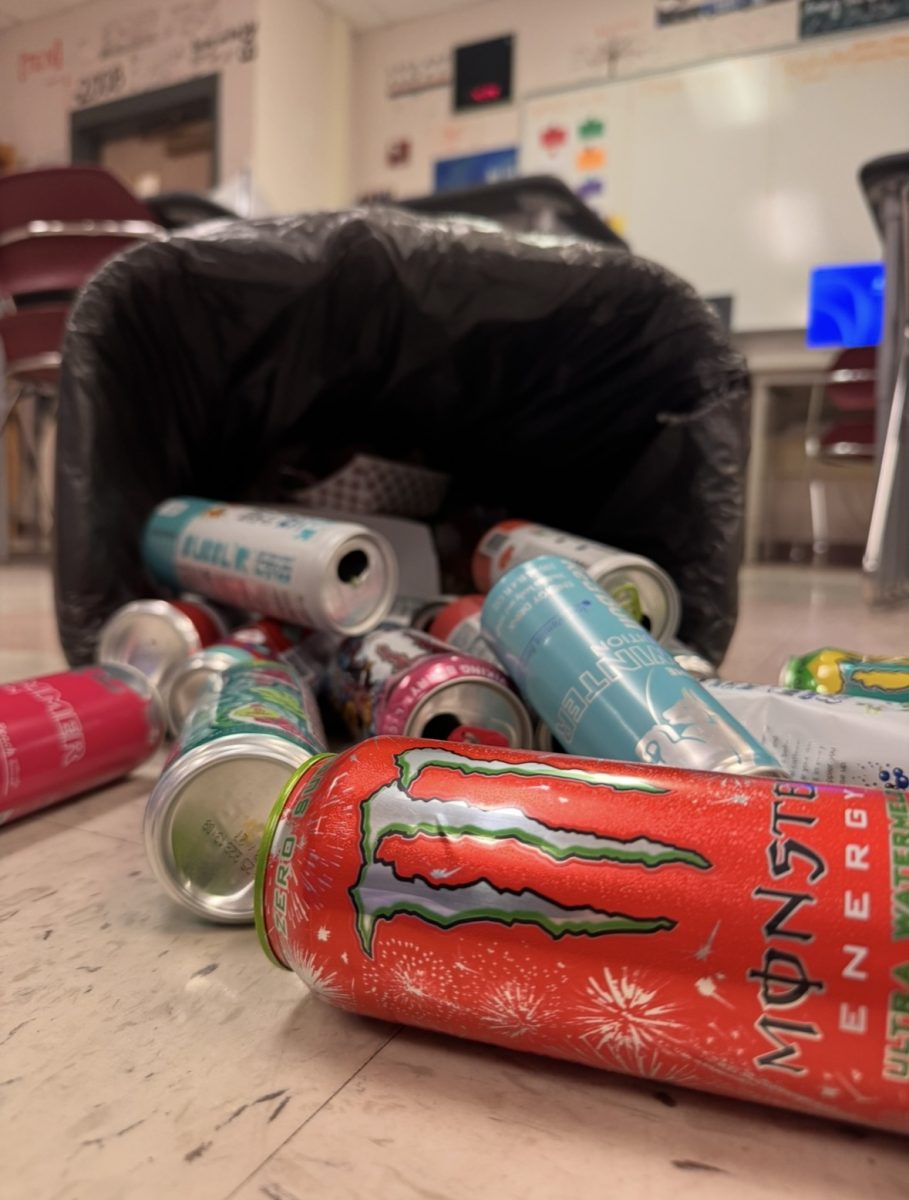
Decorated in aesthetically pleasing designs and enticing hues of color, energy drinks are the newest, trendiest lifeline for high schoolers who endure early start times and rigorous daily schedules. These beverages have significantly risen in popularity among teens and young adults, surpassing other caffeine products like coffee or tea.
While young people look to energy drinks to keep them afloat during their days in school or at work, the reliance on caffeinated beverages raises concern over the potential health risks the drinks pose. That was the focus of HOPE Club’s recent Red Ribbon Week.
“We’re seeing energy drinks everywhere, and, as advisers, we kind of know what they do to the body, what caffeine does to us as individuals, but how much do the kids know?” said HOPE Club adviser Julianne Pheney. “We’re not trying to make anyone feel bad for the choices they’re making. We’re just trying to bring attention to it [and] educate people about it so that they can hopefully learn about some healthier options and then make decisions that are good for them.”
This year, HOPE Club partnered with Thrive, an organization that advocates for mental health, thanks to School Board Member Kate Bell’s involvement. On top of HOPE Club’s 411 video and posters around North, Thrive sponsored the week by providing individual coconut waters and energy breakfast bites for students as healthier alternatives to energy drinks.
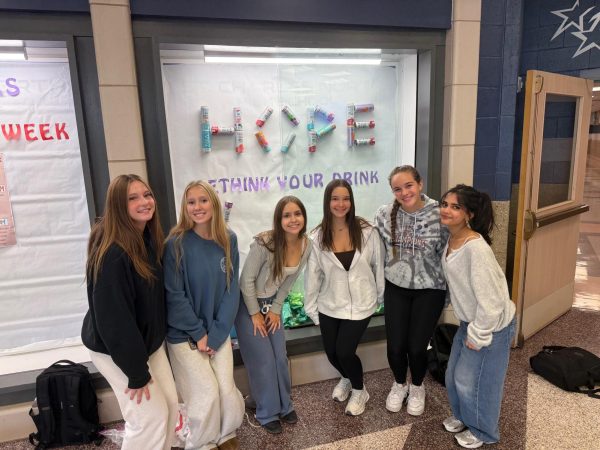
“When [Bell] realized that HOPE Club here does so much with mental health, she got very excited and it was great that we were able to meet with that organization,” said HOPE Club adviser Katherine McCleary.
Energy drinks appeal to students because of their taste, colorful packaging and the claim that they help people gain more energy. Students argue that energy drinks help them to stay awake during early start times and that they are needed in order to actively engage in school. Though high in caffeine and sugar, energy drinks play an important role in keeping students alert and avoiding the side effects from lack of sleep.
Freshman Grace Forkner says she drinks energy drinks every day and believes they are a good thing in moderation.
“[Energy drinks] taste good,” said Forkner. “They wake me up in the morning.”
Forkner is aware of the health risks energy drinks bring.
“I would [consider the health risks], but the energy drinks I have have such little caffeine that I don’t think it’s as big of a risk as other energy drinks,” said Forkner.
Senior Celeste Aguilar has been drinking energy drinks for about two months every day, preferring BUBBL’R, which is considered one of the less severe energy drink options because it contains only 69 milligrams of caffeine, roughly the same amount of caffeine in a cup of coffee. Popular brands like Celsius and Alani contain around 200 milligrams.
“I don’t like Alanis, they’re too sweet for me,” said Aguilar. “I like BUBBL’Rs because the flavors are lessened and it’s not as sweet [and] they have less caffeine. I like Celsius once in a while but not all the time, [it is] an extra boost.”
Aguilar believes that energy drinks can be harmful, but some are worse than others. While she still regularly consumes these drinks, she is open to conversation about the beverages’ impacts and changing her behavior.
“If someone were to really tell me and show me proof of how it’s affecting my body, then yeah, I would stop,” said Aguilar.
While the FDA’s recommendation for caffeine intake in adults is no more than 400 milligrams, the recommended intake for teens and children is significantly lower, with the maximum amount capping at 100 milligrams.
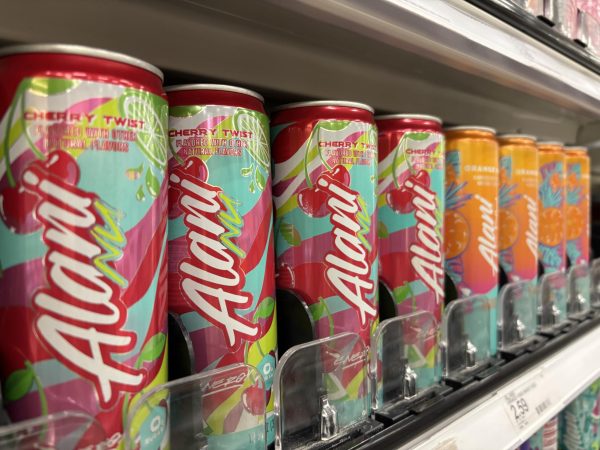
“I think a lot of people think ‘Oh there’s nothing wrong with caffeine,’ and there’s not — in smaller quantities,” said Cindy Sanoski, a professor of instruction in the Department of Pharmacy Practice and Science at the University of Iowa. “It’s with these newer beverages, these energy drinks and lemonades and things that really try to gear towards the younger population that can be potentially dangerous if consumed in excessive quantities.”
Sanoski emphasizes that excessive caffeine consumption can lead to numerous acute and chronic health issues. Alongside the risk of reacting poorly with certain medications and increasing chances for obesity, caffeine can also impact the cardiovascular system and the body’s electrolyte content.
“[Caffeine’s] primary effect on the heart is on the blood vessels. [Caffeine acts as] what we call a vasoconstrictor, where it can tighten the blood vessels up, and when you narrow the blood vessels, that can lead to increased blood pressure, so it can lead to a condition called hypertension,” said Sanoski. “[Caffeine consumption], especially with the increased urine output that can occur, can lead to electrolyte disorders … Potassium, magnesium, calcium are the big [electrolytes]. … We need those certain electrolytes to maintain a balance in our body.”
Sanoski highlights that the biggest threat caffeine consumption poses is potential interaction with underlying health conditions influenced by genetics. She stresses that it is hard for an individual to know if they could have potential complications with caffeine without health screenings and knowledge of family history, and even that may be unable to predict future complications.
Ultimately, experts, educators and teens alike acknowledge that energy drinks and caffeine consumption are complex. The effects of energy drinks vary from person to person, and consumption does not guarantee debilitating health impacts, especially if they are being consumed in moderation. Neither McCleary, Pheney nor Sanoski call for a complete halt in energy drink consumption, but for increased awareness and understanding of the potential impact that energy drinks can have and consider making changes.
“We just want kids to be aware and be informed and be educated,” said Pheney. “If they make the choice, then at least they know what the consequences are, and it’s better to know than not know at all and then [say], ‘I wish I would have known.’”