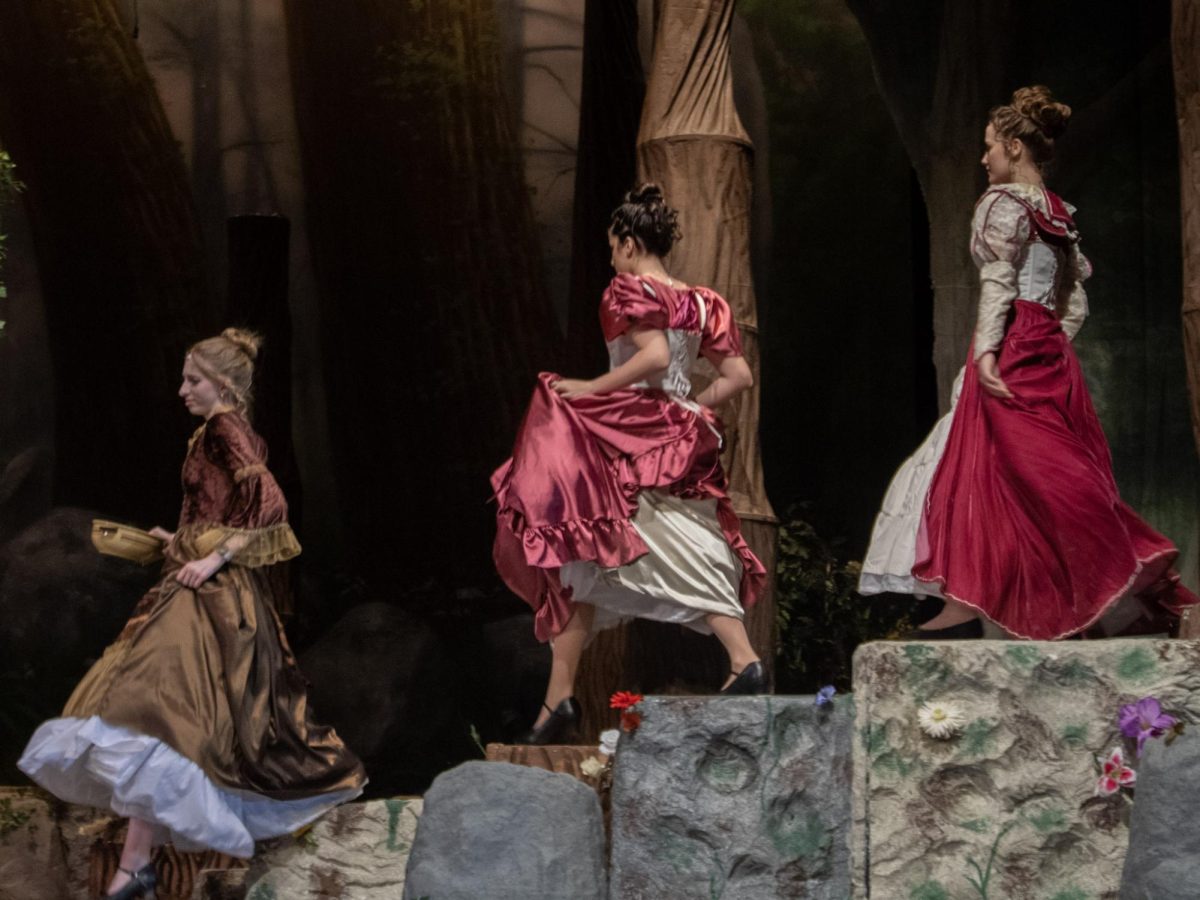
Passionate singing, community and good food all combined created an environment in which it ‘twas easy to imagine thee a peasant, lending thine ear to the town band. A new nonprofit organization, Bach on the Fox, founded by Northwestern University alumni Michael Hudetz and Walter Aldrich, has a mission to bring communities closer through early music.
Their events on Jan. 24 and 25 focused on Renaissance music from 1200 to 1700, giving a medieval-like feeling.
“It’s like you’re entering a painting or an ancient Greek play,” Hudetz said.
Their Jan. 24 event was in Hudetz’s hometown of Batavia, which both Hudetz and Aldrich thought was a good place to begin. They felt that a unique singing performance like this would help spread their passion for music while bringing the community together.
“There’s not necessarily a lot of groups doing this exact thing, and so we wanted to try it out here,” said Aldrich.
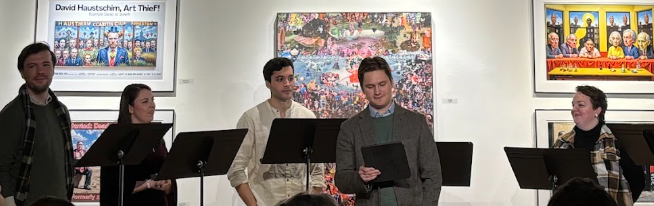
With songs like “Ohime, se tanto amate” by Claudio Monteverdi and “Komm, o Tod, du Schlafes Bruder” by Johann Sebastian Bach, the singers showed that Renaissance music, while not extremely popular today, certainly expresses the human voice the way composers hoped.
With soprano, tenor and baritone singers capturing the high notes of the music, it was a style slightly different from the “classical” music most people think of.
“It’s something that’s just not done a whole lot. We want to catch this whole stream of early music and really bring that to life in a way that often doesn’t happen,” said Aldrich.
For some people, it is difficult to find the difference between so-called “classical” music and Renaissance music. While some songs may have different styles, musical periods have extremely blurred lines.
“All of these periods of music, like Renaissance, medieval, classical are something historians use to categorize music that share similar traits, to try to put it into a genre or a time period, but it doesn’t always fit neatly into that category,” Hudetz said.
Renaissance music differs from the rigid rules of most music after 1750 by focusing more on the meaning and expression of the music rather than the rhythm.
“Composers did that through things like text painting, where maybe you have some words that are talking about the bird song, and the composer will literally write something that sounds like birds chirping, things like that,” Hudetz said.
Planning the event was not easy for Hudetz and Aldrich. Some singers had to be flown in, and there was the task of finding and renting a suitable venue. Even the food and drink were a big part of the event. Luckily, Hudetz and Aldrich found volunteers willing to help them bring the events they had dreamed of to life.
One of Hudetz’s and Aldrich’s goals is to spread Renaissance music not just by having people attend, but by teaching musicians how to do it themselves.
“[A] program we’re working on developing is to educate and train young musicians to be able to do this kind of music as well, so they could use it in their careers or participate in programs kind of like ours,” said Aldrich.
They also wanted to bring people closer together. They did this by making the concert interactive, with the musicians coming to speak with the audience during the intermission. This was a nod to how music was presented in the Renaissance period, which was how they wanted to structure it.
“These people would come together and do this music together as a community activity, and it wasn’t so much concert with audience and stage,” Aldrich said.
With a turnout of approximately 40 people and enthusiastic clapping after every song, the event was a big success. While Renaissance music may not be everyone’s cup of tea, the excellent singing and social interactions made the event a memorable one.
“There’s no divide between musicians and audience. We want to be part of the community. We want to bring people together for a nice time, and we want it to be social. And I think that builds connections and builds community,” said Hudetz.